
For grassroots and junior clubs
The grassroots club app, off a phone.
Register the children, get the subs in and get a squad out on Saturday. The grassroots football club app that does the admin from a parent's phone.

A week at the club.
The under-11s side, the Sunday league team, the club run by three parents and a group chat. This is a normal week once the admin stops taking an evening each.
Sign up once, from a phone.
A parent registers their player from their phone browser: contacts, emergency numbers, medical notes and consents, in one place and kept with the player. No app store download for that first form.
Subs in instalments.
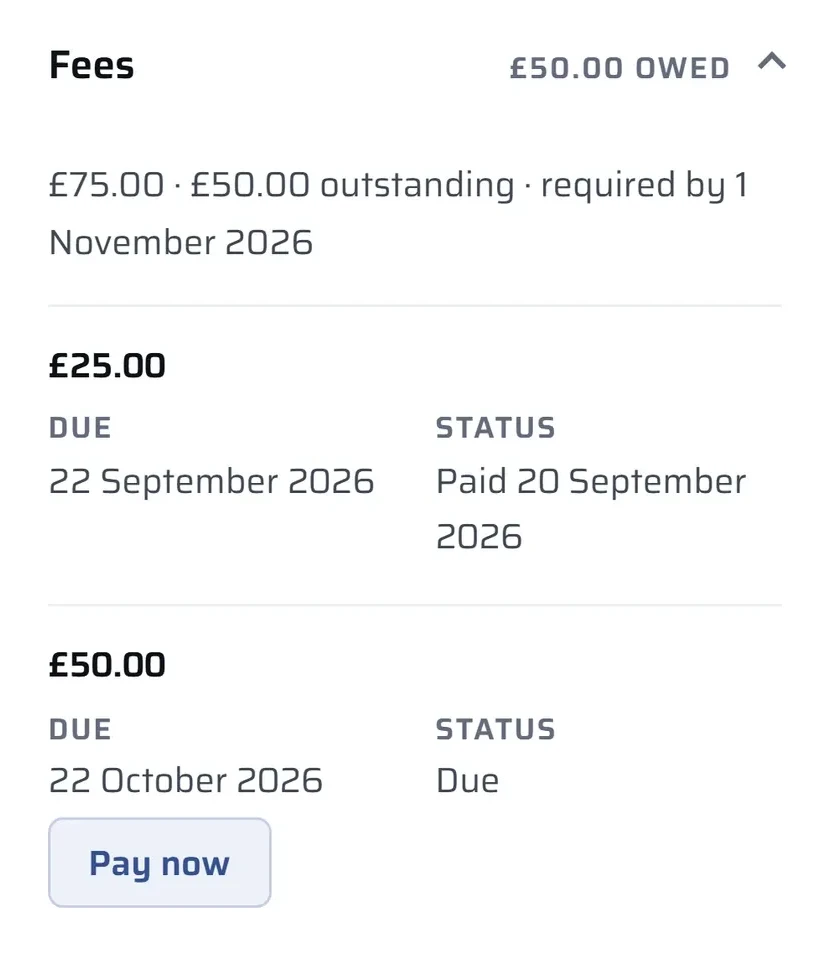
Split subs into one to twelve even instalments with due dates, and each family pays each one by card. Remind one family, a team or everyone overdue in one tap. Card payments go into the club's own Stripe account.
Know who is playing.
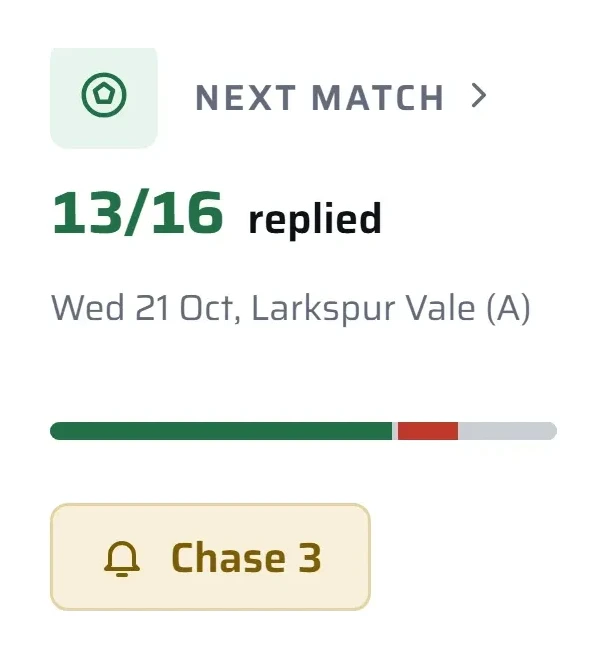
Families are asked about a week before and chased about two days before if they have not replied. You see everyone in one list, so nobody is reading back through a group chat on Saturday morning.
Kick-off moved? One message.
Message your team's families in one go, and nobody has to swap phone numbers. Replies come back to the manager only.
Safe with children, on every plan.
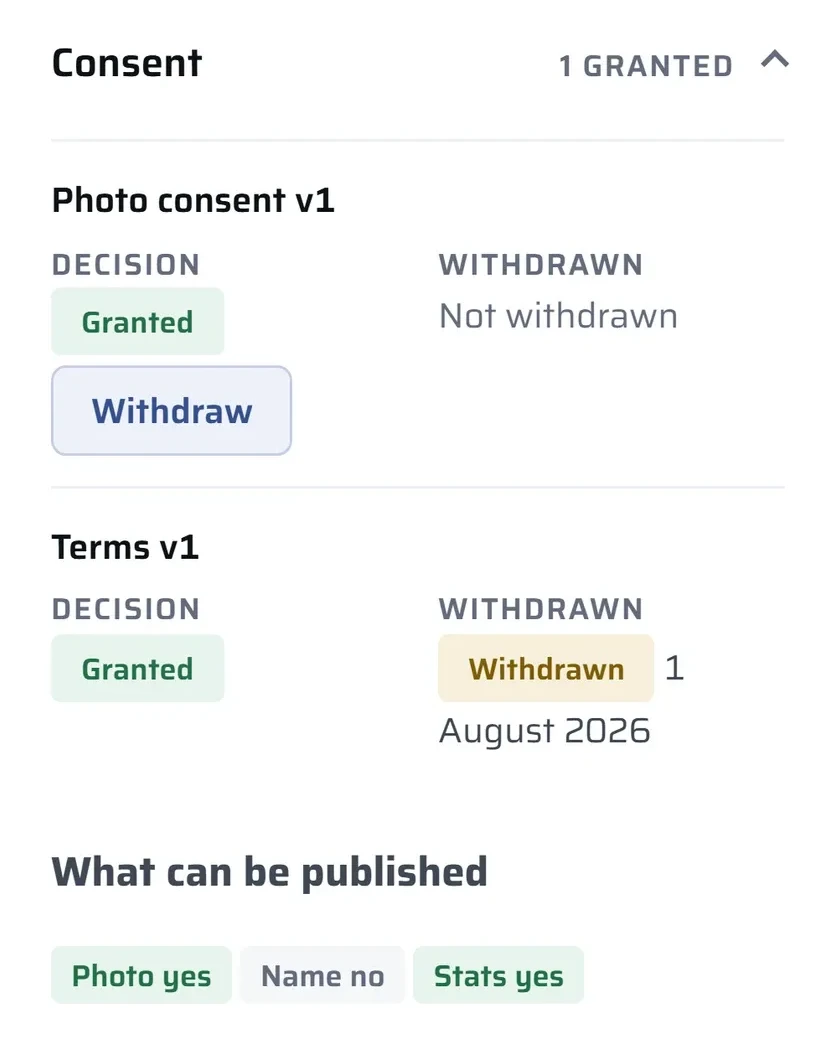
Each consent is a separate yes or no, stored against the wording the family agreed to, with the date. No adult can message a child one to one, and no setting turns that off.
Everything it does for a junior club.
Every job a grassroots club hands to volunteers, one line each, with the plan your club needs for it.
Registration from a phone
A parent registers from their phone browser, once. No app store download for that first form.
Every planContacts and medical notes
Contacts, emergency numbers and medical notes in one place, kept with the player.
Every planMoving up an age group
A player moving up an age group keeps their record. The family confirms the details again.
Every planBring your spreadsheet
Upload your spreadsheet, check how the columns match, preview it, then bring it across. An import can be undone until a family has acted on it.
Every planSubs in instalments
Split subs into one to twelve even instalments with due dates. Each family pays each one by card.
Club and upReminders, in one tap
Remind one family, a team or everyone overdue in one tap.
Club and upCard payments to the club
Card payments go into the club's own Stripe account.
Club and upAvailability in one list
Families are asked about a week before and chased about two days before. You see everyone in one list.
Club and upMessages to a team
Message your team's families. Replies come back to the manager only.
Club and upA basic club website
A basic public site on every plan. Your colours and crest from Club.
Every plan, colours from ClubConsents, by version
Each consent is stored against the wording the family agreed to, with the date.
Every planNo adult to child messages
No adult can message a child one to one, and no setting turns that off.
Every planPhotos, parent controlled
Photos are a separate yes or no. A parent can withdraw it later.
Every planRecords kept for a set time
Each kind of record, messages included, has a retention period. A club can change it with a reason, and place a hold.
Every plan
The tag shows which plan a club needs. Plans are priced per club, never per player. See every feature, the three prices and how safeguarding works.
What it never does.
A junior club is trusted with children and their details, so here is what the app will not do.
How safeguarding works- No adult can message a child one to one. There is no setting that turns that off.
- It never chases subs on its own. Every reminder is sent by a person.
- An import never brings medical details or consents across. Each family fills in their own.
- It never puts third-party adverts on the club's site, at any price.
- It never claims to make a club compliant. That duty stays with the committee.
Medical notes and emergency contacts are visible to the club admin and the manager of the child's own team. Every time someone opens them, it is logged.
Questions clubs ask first.
Straight answers to what grassroots clubs ask before moving off a group chat and a spreadsheet. If yours is not here, email info@thefullsquad.com and a person will reply.
Is it free for a grassroots or junior club?
No plan is free, but pricing is published and per club, never per player, from £19 a month + VAT billed annually. The three prices say exactly what each one adds.
Do parents need to download an app to register their child?
No. A parent registers from a phone browser, with no app store download for that first form. Contacts, emergency numbers and medical notes land in one place, kept with the player.
Can a club run by three parents and a group chat manage this?
Yes. It is built for that club, not a full-time administrator. A parent fills in their own form, the committee approves it, and there is nothing to learn on a training night.
How does subs collection work?
On Club and Pro, split the subs into one to twelve even instalments with due dates. Families pay each one by card, you remind anyone behind in one tap, and card payments go into the club's own Stripe account. Starter clubs do not take card payments in the app.
We run the club on a spreadsheet. Can we move over without retyping everyone?
Yes. Upload the spreadsheet, check how the columns match, preview it, then bring it across. Players, a parent or guardian and one emergency contact come over, and each family fills in their own consents. An import can be undone until a family has acted on it. If you are coming from another app, see how we compare.
Is my child's data safe with a small volunteer-run club?
Every consent is recorded against the exact wording you agreed to, and no adult can message your child one to one. Medical notes and emergency contacts are visible to the club admin and the manager of your child's own team, and every time someone opens them, it is logged.

Get the season back.
Early-access clubs are set up personally, and places are limited. Get on the list, or tell your committee.